The CEO
Deep · commanding
● CEO male lead
Deep and commanding, for lines that land downward
Male leadsMale9 languages
When you choose voices for short drama characters, two rules matter: the voice has to fit the person, and it has to stand apart from everyone else in the scene. Viewers often listen to a vertical drama without watching, so they recognise who is speaking by voice alone. This guide gives a cheat sheet for 12 common archetypes (CEO lead, sweet heroine, villain, elder, narrator and more), shows how to separate leads from supporting roles by pitch, pace and texture, and ends with a checklist for avoiding clashes within one drama. Every voice in the table can be previewed in the voice library.
Updated Nov 5, 2026Fact-checked Nov 5, 2026
Sample A · Showdown at the engagement party
English · Script excerpt · 5 characters
Narrator
The champagne tower is barely up when Nora opens her eyes — she's back on the day they framed her.
VivianCold laugh
Sign the share transfer, little sister. Everyone's waiting on you.

NoraCalm
Sign it? Maybe look at the big screen first, Vivian.
Narrator
The lights dim. On screen, security footage — Vivian tipping powder into Nora's glass.
The order you cast in matters more than any single voice. Follow it and the drama's sound holds together from the first episode.
Step 1
List everyone who talks, with their number of lines, gender, rough age and role. The three or four roles with the most lines are the backbone of the drama's sound.
Tip · Put extras and one-line passers-by in a separate column and deal with them last.
Step 2
These three are heard most, so they set the tone of the whole drama. The female lead must be pleasant to listen to for a long time, the male lead must contrast with her, and the narrator must be steady and easy on the ear.
Step 3
Villains, best friends and elders should differ clearly from the leads on pitch, pace or texture. The more scenes someone shares with a lead, the more different they should sound.
Step 4
Several passers-by can share a voice, but never let two of them talk to each other in the same scene with that voice.
Step 5
Pick an argument or a twist scene and listen with your eyes closed. If you can name the speaker of every line instantly, the casting works.
Step 6
Save the final cast list and use it for every episode. Change a voice mid-series and viewers think the actor changed; how to prevent that is in fixing inconsistent character voices.
Every voice below comes from the AI Drama Voice library, with its style label in brackets. First choice fits the archetype best; the alternative is for when another role in the same drama already has the first choice.
| Archetype | First choice | Alternative | What to aim for |
|---|---|---|---|
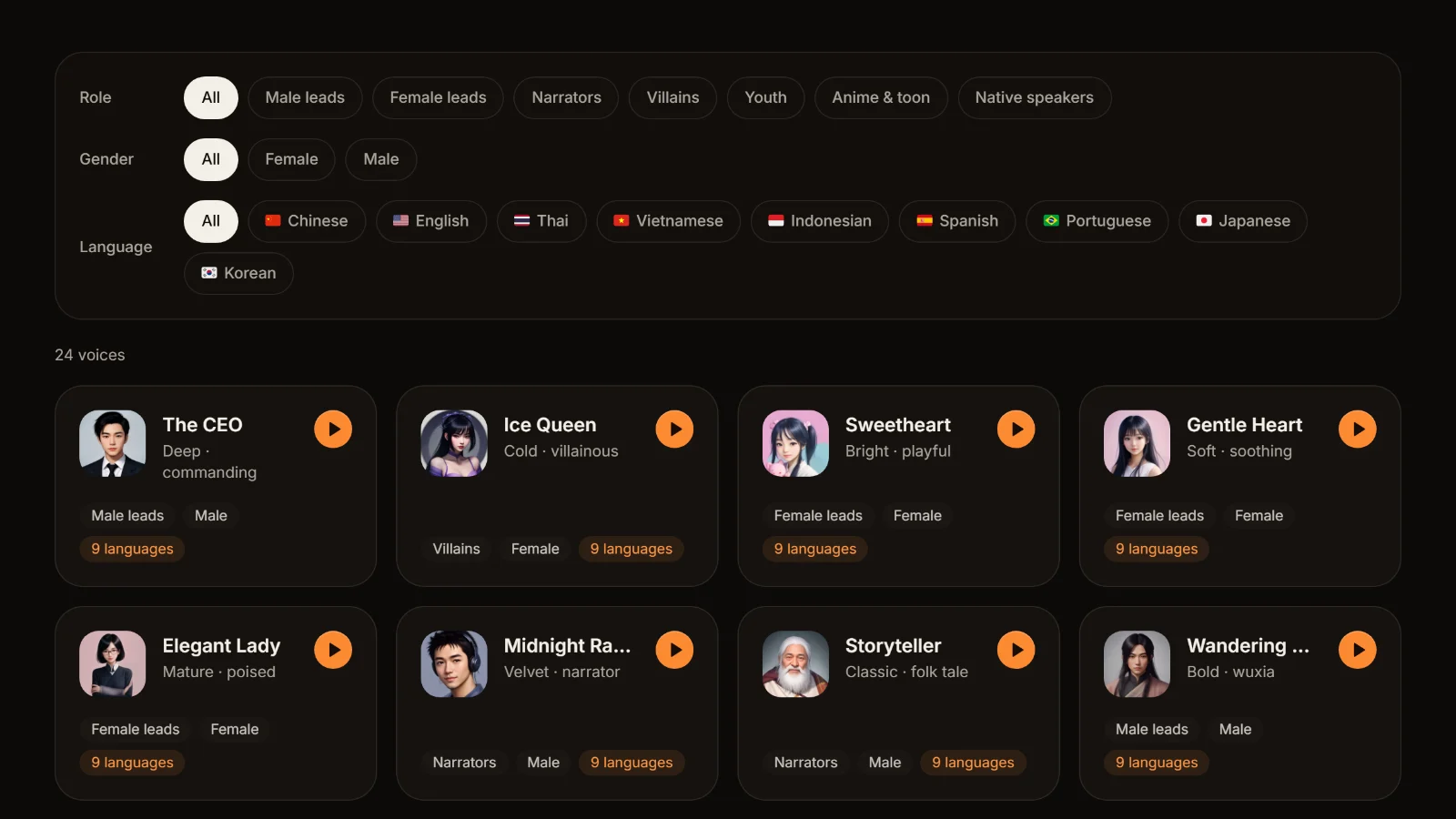
| CEO male lead | The CEO (deep · commanding) | Keynote Voice (confident · tech) | Low, steady, lines that land downward, few exclamations |
| Sweet heroine | Sweetheart (bright · playful) | Gentle Heart (soft · soothing) | Bright, light, wide emotional range |
| Strong heroine, revenge lead | Elegant Lady (mature · poised) | Ice Queen (cold · villainous) | Mature, unhurried, turns cold when she fights back |
| Scheming rival, villainess | Ice Queen (cold · villainous) | Elegant Lady (mature · poised) | Cold with a smile in it, far from the heroine |
| Kind best friend | Gentle Heart (soft · soothing) | Sweetheart (bright · playful) | Soft, warm, mid pace |
| Young man, little brother | Young Hero (clear · energetic) | Esports Caster (hype · fast-paced) | Clear, quick, younger than the male lead |
| Father, elder, family head | The Father (warm · grounded) | Storyteller (classic · folk tale) | Weighty, slow, sounds older |
| Hero, general, sect master | Wandering Hero (bold · wuxia) | The Father (warm · grounded) | Open and powerful |
| Comic villain, sidekick | Cartoon Villain (over-the-top · comic) | Monkey King (lively · anime) | Exaggerated, bouncy, good for AI comics |
| Modern or story narrator | Midnight Radio (velvet · narrator) | News Anchor (crisp · broadcast) | Steady, clear, easy to hear for long stretches |
| Period storyteller narrator | Storyteller (classic · folk tale) | Midnight Radio (velvet · narrator) | Rhythmic, a hint of the storyteller's cadence |
| Host, assistant, bubbly side role | Live Host (upbeat · sales) | Sweetheart (bright · playful) | Energetic and fast |
Casting a CEO romance
The classic CEO-drama mistake is giving both the male lead and the rival a deep voice. Keep The CEO for the lead and give the rival something brighter and quicker, such as Keynote Voice, so listeners know who is who at once. More on CEO archetypes in CEO voice dubbing.
Two characters sound alike when they are close on all three dimensions. Separate them on one and listeners can tell them apart; separate them on two and they never blur.
| Dimension | How to separate | Example |
|---|---|---|
| Pitch | One higher, one lower, or one male and one female | Bright Sweetheart for the heroine, lower and colder Ice Queen for the rival |
| Pace and rhythm | One fast, one slow; one clipped, one leisurely | Young Hero in short bursts, The Father taking his time |
| Texture | Deep, bright, husky, breathy or broadcast-clean | A crisp News Anchor narrator against a deep male lead |
If your problem is that one character sounds different from one episode to the next, that isn't casting; the cast list was never locked. Causes and fixes are in why character voices drift between episodes.
All 12 voices speak Chinese and eight foreign languages, which makes them the right pool for a drama's main roles. Voices with a play button can be heard right here.
Deep · commanding
● CEO male lead
Deep and commanding, for lines that land downward
Bright · playful
● Sweet heroine
Bright and light, scenes with big emotional swings

Mature · poised
● Strong heroine
Mature and poised, also a good female narrator
Cold · villainous
● Villainess
Cold with a smile, cold-laugh and sarcastic lines

Soft · soothing
● Kind best friend
Soft and soothing, gentle supporting roles

Clear · energetic
● Young man, brother
Clear and lively, younger than the male lead
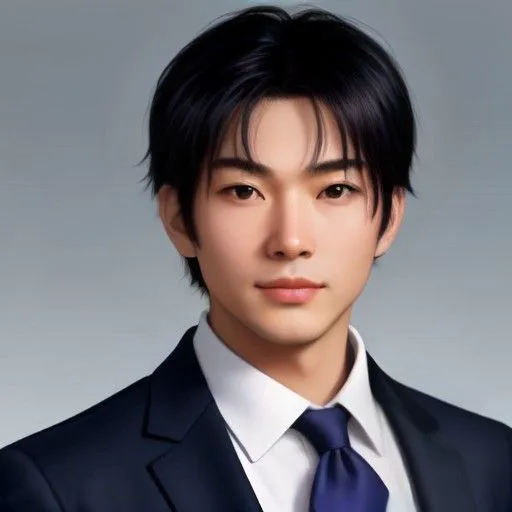
Warm · grounded
● Father, elder
Weighty and calm, anchors family scenes
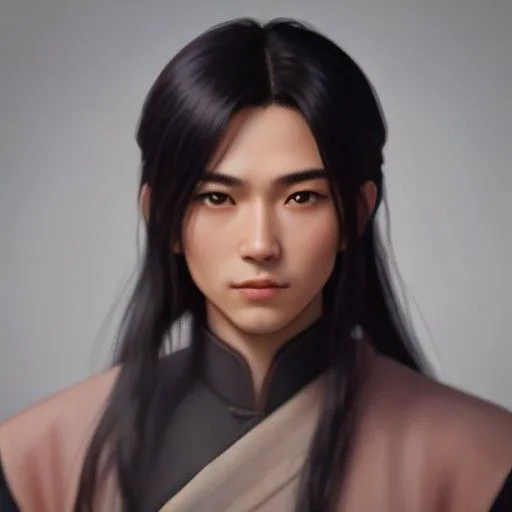
Bold · wuxia
● Hero, sect master
Bold and open, wuxia and xianxia
Velvet · narrator
● Modern narrator
Velvet and steady, story videos and city dramas
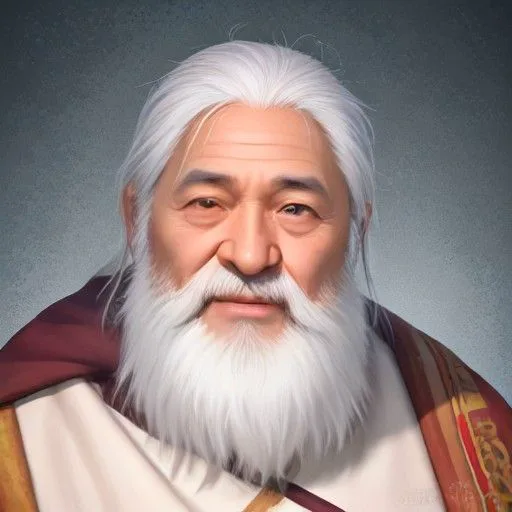
Classic · folk tale
● Period narrator
Storyteller cadence, period and guofeng comics

Crisp · broadcast
● Female narrator
Crisp diction, keeps clear of a deep male lead
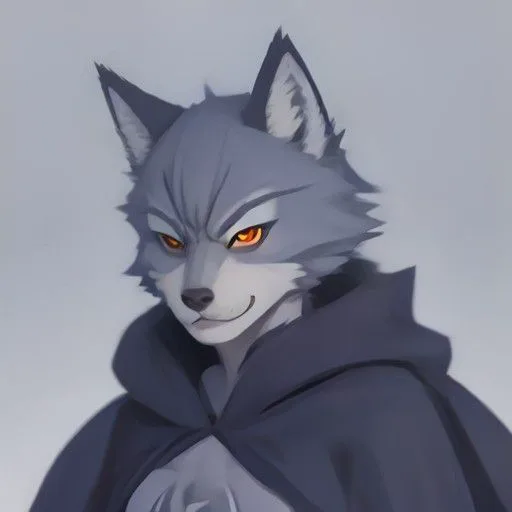
Over-the-top · comic
● Comic villain
Over the top, AI comics and light comedy
Paste a script into the workshop and click Analyze cast: AI Drama Voice lists the narrator and every character and assigns a voice to each. The automatic casting follows rules, and knowing them tells you where to step in:
If a choice feels wrong, click the swap button next to the character and browse by category (male leads, female leads, narrators, villains, youth, anime and toon), previewing where a sample exists; the pick applies at once. Cast analysis is free, so adjust as often as you like before generating.
Native-language voices
The library also has native voices such as Lily, Brian, Arthur, Hina, Jiwoo, Mateo, Thiago and Aoi, labelled English only, Japanese only and so on in the swap panel. To keep one character on the same voice in Chinese and every foreign language, pick from multilingual voices like the 12 above.
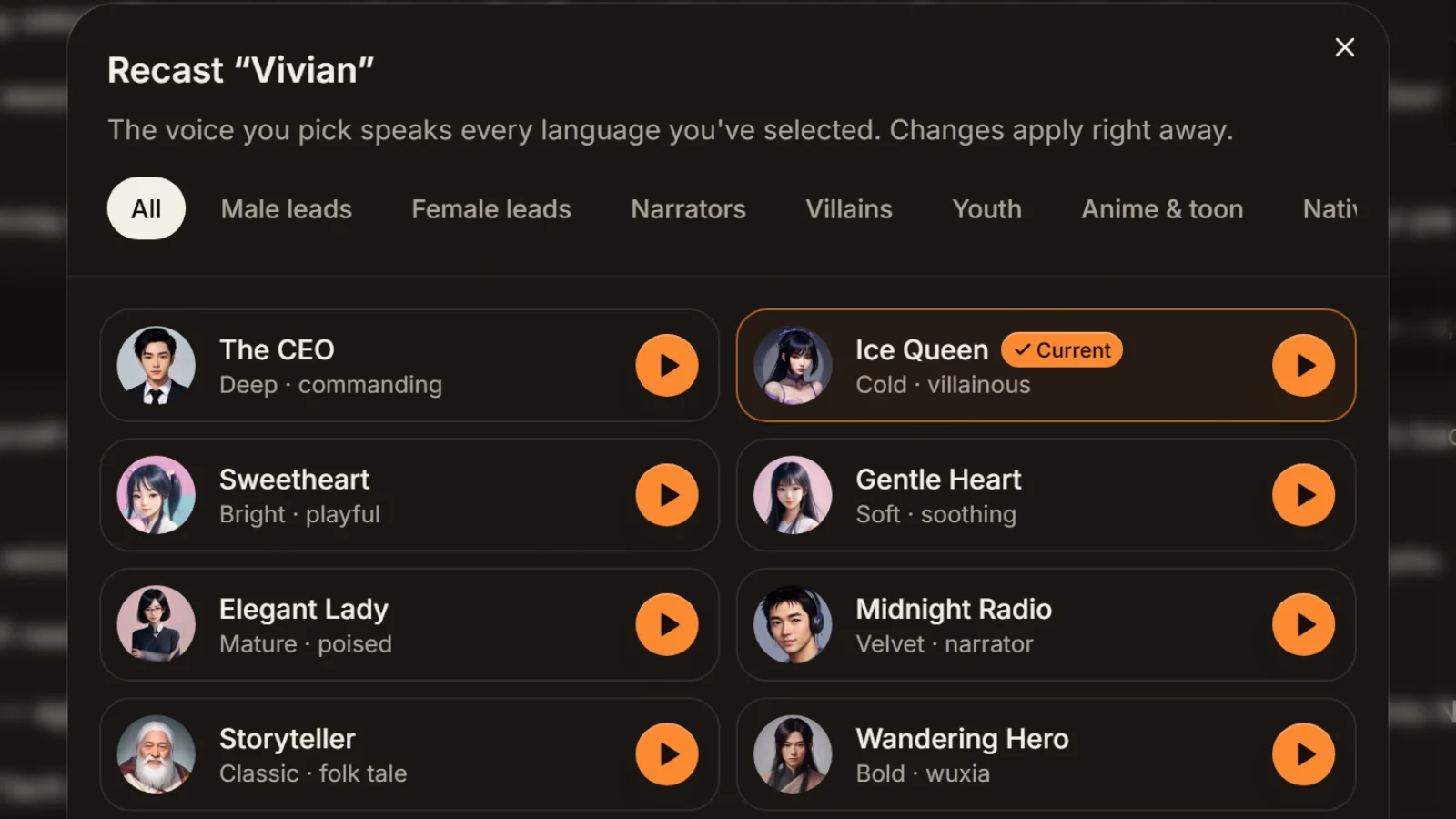
Count speaking roles, not names on the cast sheet. Each of our four sample episodes uses five or six voices including the narrator: one narrator, a male and female lead, one or two villains or elders, and a supporting role. That is a very common size for a single vertical-drama episode.
| Type of drama | Typical voices (incl. narrator) | Notes |
|---|---|---|
| Story or recap videos | 1–3 | Mostly narrator, one or two characters for key lines |
| City, CEO and romance dramas | 4–6 | Narrator, two leads, a villain, an elder or a friend |
| Palace, xianxia and family ensembles | 6 or more | With many roles, reuse voices for minor parts in different scenes |
The big difference with an audiobook is that narration carries most of the text. So the narrator always comes first: easy to listen to for an hour or two, clear diction, emotion kept in check. Characters can be fewer: one voice each for the main people, while minor characters are covered by the narrator shifting tone. Keep the cast list stable across chapters. Midnight Radio or Storyteller suit action-heavy male-audience novels; for romance, try Elegant Lady or News Anchor as narrator.
Two characters who share scenes must not have the same gender and the same voice type at once.
The voices of the female and male lead are never given to anyone else, not even a one-line passer-by.
The narrator must not share a voice with any role, or listeners can't tell narration from dialogue.
Within an episode, each voice plays one character; when extras share a voice, keep them out of the same scene.
One name per character for the whole series; Nora and Nor are two characters with two voices. Script layout is in short drama script format.
Listen to the most heated scene with your eyes closed. When every line is instantly recognisable, generate the episode.
To choose voices for short drama characters, fix the female lead, male lead and narrator first so they fit the roles, then pick villains and supporting voices that differ clearly in pitch, pace or texture, and finish with an eyes-closed test of one argument scene.
From most lines to fewest: the leads with the biggest parts, then the roles that share scenes with them, then extras. Compare every new pick with the voices already chosen to avoid clashes.
Separate them on at least one of pitch, pace and texture: male and female, high and low, fast and slow, or deep and bright. The most common clash is a deep male lead with a deep male narrator; switching to a female narrator fixes it.
As many as there are speaking roles. City, CEO and romance vertical dramas commonly use four to six voices per episode including the narrator; story videos one to three; palace and xianxia ensembles more, with minor roles reused across scenes.
Choose the narrator first: easy on the ear, clear, emotion in check, because narration is most of the text. Give the main characters one voice each, let the narrator cover minor ones by shifting tone, and keep the cast list stable across chapters.
Yes. Paste a script into AI Drama Voice and click Analyze cast: it casts from character names and line emotions and avoids repeats, and you can swap any voice by hand. Analysis costs nothing; see pricing.
Paste a script to get a cast list where every role can be previewed and swapped, and the chosen voices speak Chinese and every foreign language.
Billed by characters generated · Failed runs refunded automatically · Alipay, WeChat Pay and cards